The tea garden
By Theresa M. Forte
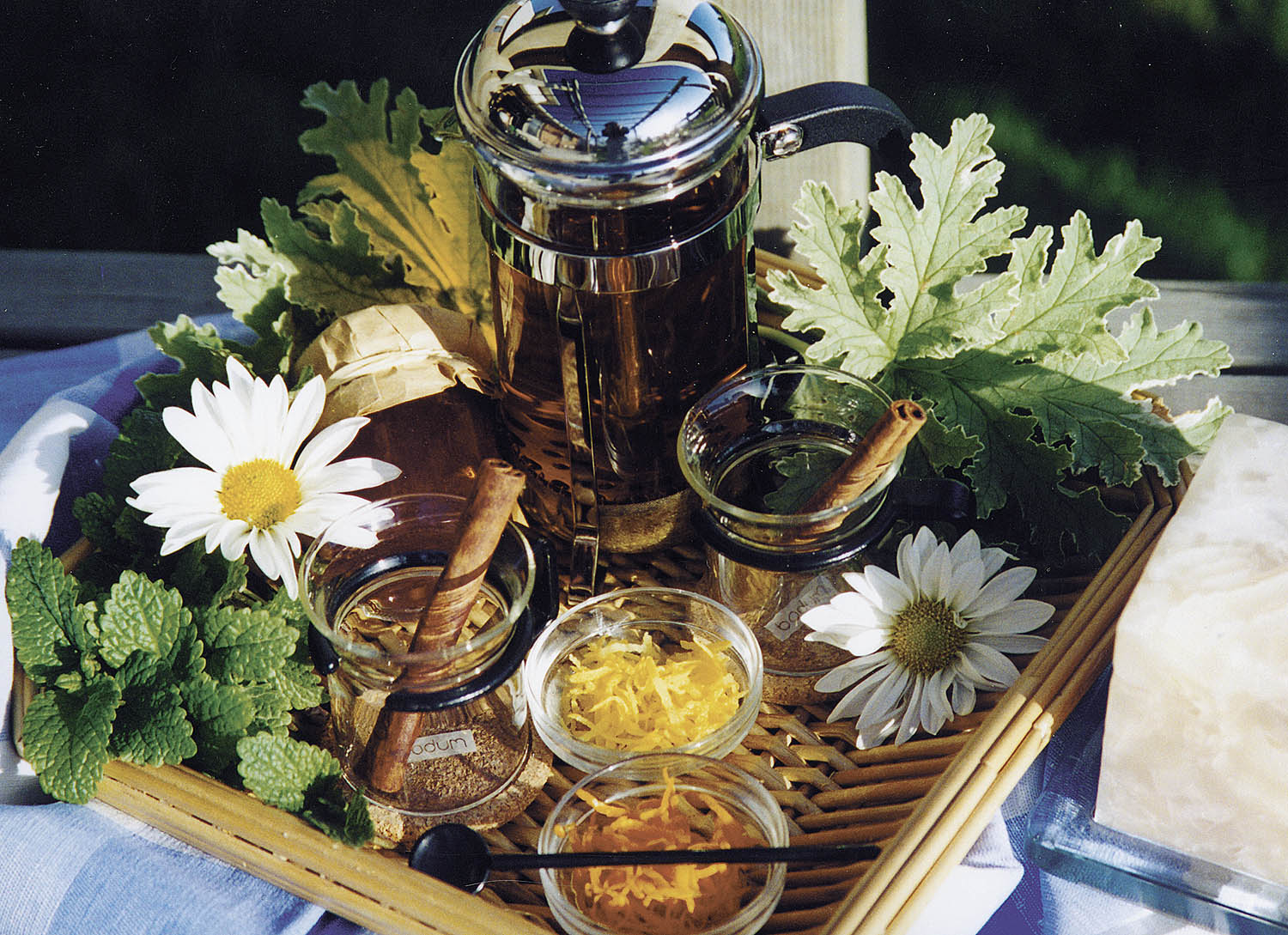 |
In days gone by, tea was not just a beverage, it was an event. On glorious summer afternoons, fashionable Victorian ladies would gather in elegantly appointed gardens for afternoon tea. The tea was ceremoniously poured into fine china cups and served with fancy cakes and biscuits. Ladies would enjoy a leisurely afternoon of camaraderie and visual delights.
Things are different today. With our non-stop lifestyles, we are satisfied to line up like sheep at the local drive-through for a hastily poured cup of coffee, served in a paper cup with a plastic lid, to be consumed as we race along to our next appointment. If we wait for more than a minute or two, we complain about the delay. No wonder we’re stressed out. Admittedly, few of us are willing to revert back to the Victorian days, but why not include some of the Victorian pleasure garden philosophy in our gardens?
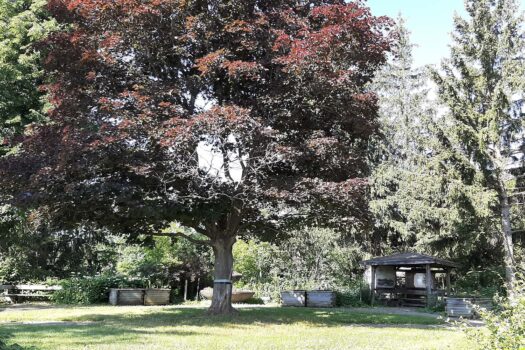
I envision a softly coloured, scented, beautiful and easy-to-care-for garden filled with tea herbs. This square garden would have a formal geometric layout, with the planting areas divided by pathways. A focal point would be created by softening the angular beds with a circular pathway in the centre of the square. Depending on the budget, the garden could be edged in brick with pea gravel pathways or paved with tumbled paving stones.
 |
|
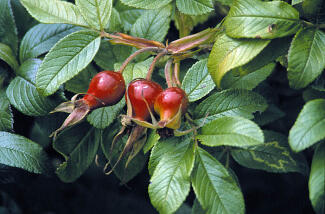
| Hips from Rosa rugosa make a beautiful show in late summer. |
Such a garden could enhance a larger property, a scented, secret garden would be created if hedging enclosed the space. It could easily be adapted to become a complete courtyard garden for a townhouse. The pathways allow easy access to all parts of the garden without compacting the planting areas. These plants are also suitable for container planting. By congregating a collection of clay pots on a patio or balcony, a portable tea garden can be simply arranged. Ideally, this garden would have a comfortable bench to encourage visitors to linger and relax in this fragrant garden.
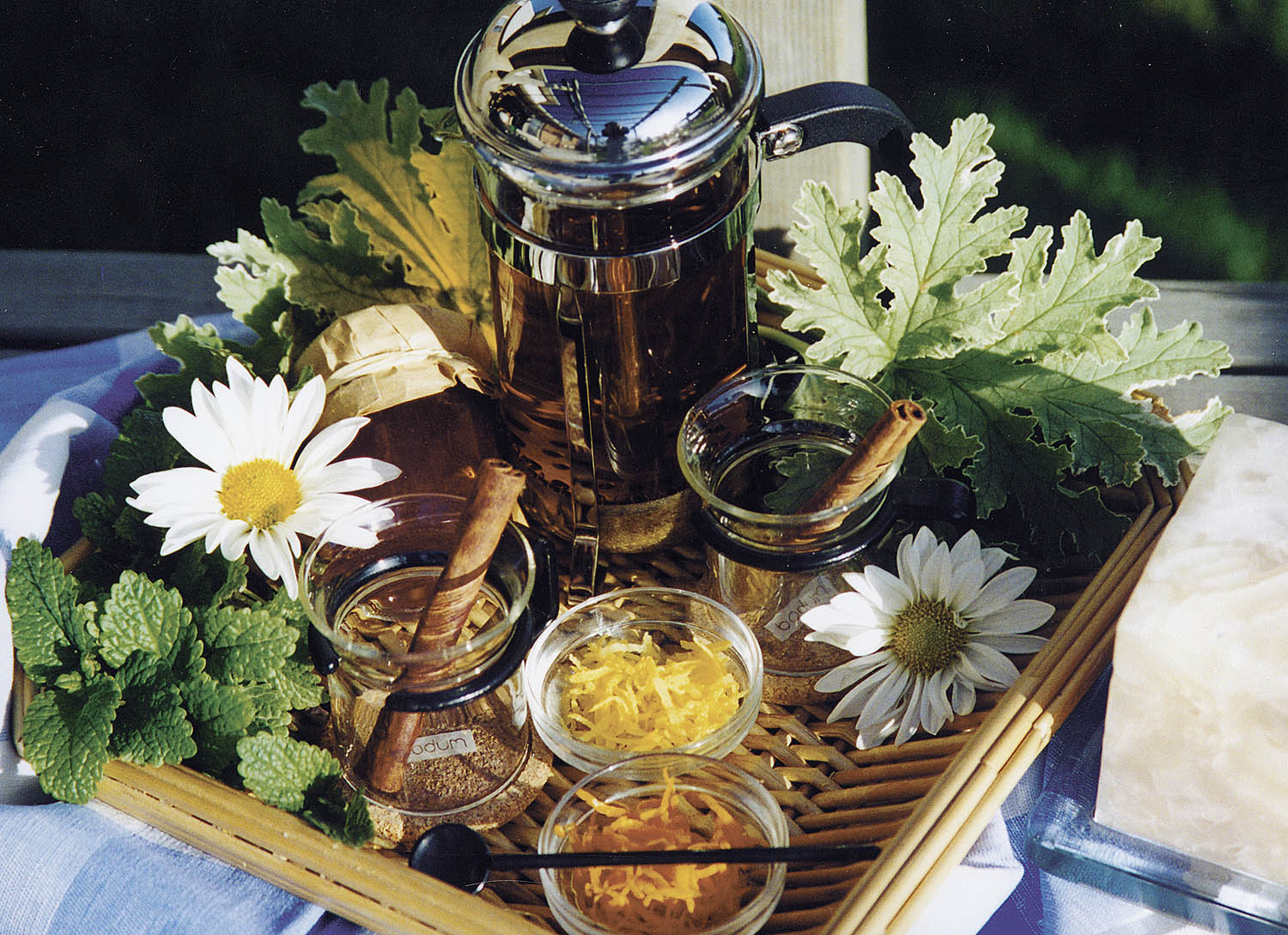
The following herbs would be included in my tea garden: rose scented bee balm (bergamot); lemon balm (Melissa officinalis); borage; German chamomile (Matricaria reculita) — it has the most prolific flowers; lemon verbena; anise-hyssop, rosemary; angelica; roses (Rosa rugosa); lemon thyme; sage (Salvia elegans); pineapple sage; and finally mints, planted in sunken containers, in flavours such as apple (M. suaveolens), orange (M. x piperita citrata) and variegated pineapple mint (M. suaveolens ‘Variegata’).
Annuals such as Lemon Gem marigold, heartsease (Viola tricolor), Heliotrope and scented geraniums keep the garden colourful all season.
Tips:
|
With a garden filled with delicately flavoured herbs, the possible tea-blends you can create are limited only by your imagination. Just to get you started:
- Marigold and lemon balm
- Lemon verbena and mint
- Fresh blackberries (1 tablespoon) and 10 lemon verbena leaves (for one cup)
Theresa M. Forte is a garden writer and photographer based in Niagara Falls, Ont.