
By Julia Harmsworth
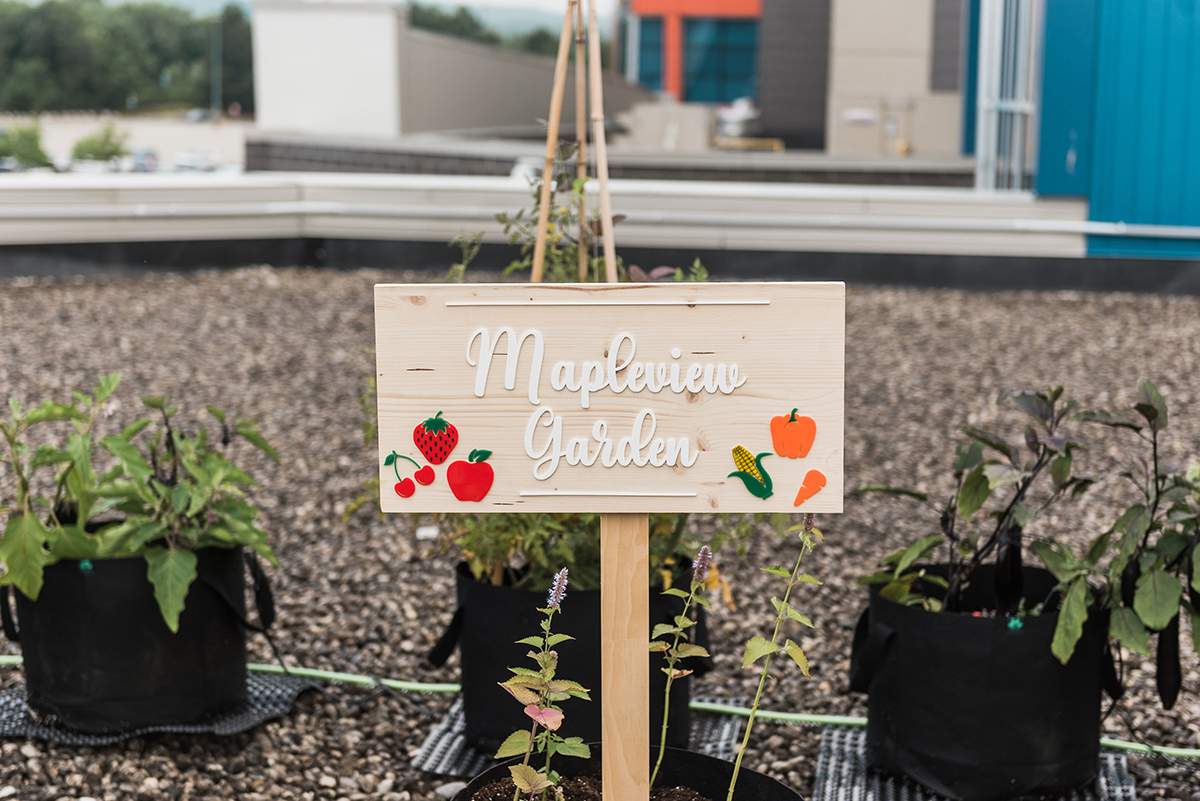
Concrete is going green in a new initiative from Mapleview Shopping Centre in Burlington, Ont. The rooftop of the mall was recently transformed into a full-sun, 30-pot garden that produces vegetables, herbs, and wildflowers native to Ontario that attract pollinators.
The project is in partnership with MicroHabitat, which works with clients to create urban farms. It seeks to reduce the shopping centre’s environmental footprint and support the local community, as everything harvested is donated to the Burlington Food Bank.
“We’re really happy […] knowing we’re making use of a space on our rooftop that previously wasn’t technically used for anything other than being a functional rooftop and seeing that it can do good for our local community,” said Melissa Wagner, Marketing Manager at Mapleview.
Wagner said the garden has seen “tremendous” growth since it opened in late May — including large yields of tomatoes, zucchinis, and peppers — and the positive response from the community has been “really amazing.”
She hopes to use the garden to highlight the mall’s other sustainability initiatives, like their waste diversion and recycling program and electric vehicle charging stations.
“The bigger picture is around sustainability,” said Wagner.
In July 2023, Mapleview hosted a Growing Mini Gardeners event to celebrate the new garden, which taught children about gardening and raised $3,060 for the Burlington Food Bank.
Most of MicroHabitat’s clients choose to donate their harvested produce to food banks, which Zoë Hughes, Chief Urban Farmer at MicroHabitat in Toronto, said is increasingly important given the increase in food bank usage since the pandemic.
“Having this program where we’re connecting our clients with food banks is really increasing the availability of fresh produce for people who may not have access to it,” Hughes said.
On average, each of MicroHabitat’s urban farms produces 300 lb. of produce per year. The company installs farms in May and June, setting up a pot system with geotextile bags, planting everything, and seeding the root vegetables. A gardener returns once a week to maintain the farm. Harvesting begins one month after planting.
“We take unused spaces like rooftops or terraces or grassy areas that don’t have any kind of productive space on them and we transform them into a productive space,” Hughes said.
MicroHabitat also partnered with Yorkdale Shopping Centre in Toronto, Ont. in 2022 and Square One Shopping Centre in Mississauga, Ont. earlier this year to create rooftop farms.
