|
Acer tataricum subsp. ginnala Syn. Acer ginnala Amur Maple
|
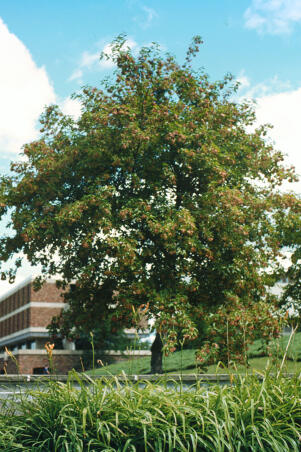
| Description | Amur maple is an excellent choice for the limited urban setting. Its tolerance to challenging site conditions, freedom from pests and fine fall colours make it particularly suited for the small space. |
| Usage | Bonsai, planter, hedge, specimen, street tree; settings away from natural areas. |
| Origin | China, Japan |
| Hardiness zone | 2,3 |
| Size | 4-8m |
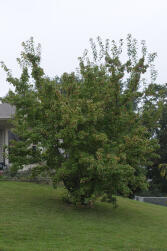
| Form/texture | Small tree with single or multiple trunks or large, multi-stemmed shrub. Broad, rounded, finely branched. |
| Growth rate | Moderate. |
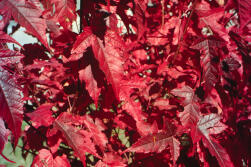
| Leaf | Opposite, simple, lobed, showy fall colour. |
| Flower | White to yellow, fragrant, somewhat showy, May. |
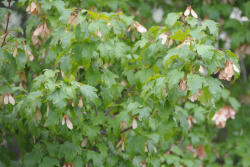
| Fruit | Samara, abundant, some very showy in summer and fall. |
| Exposure/culture | Full sun to part shade. One of the most winter hardy introduced maples. Tolerates all soil types and a wide range of pH. Tolerates occasional wet to very dry soils. Moderately sensitive to salt (Beckerman et al). Few pest or disease issues. Easy to transplant. Easily pruned to produce shape for desired use. |
| Comments | This plant is often chosen for its showy samaras. Abundant, easily germinated seeds put A. t. subsp. ginnala on the U.S invasive plant list for 7 states (www.invasiveplantatlas.org/trees.html). Amur maple tolerates challenging growing conditions well but is best in urban settings where seedlings will not infiltrate natural areas. It makes a fine specimen when grown with one or two to three trunks. Several cultivars have been selected, including Flame. It was selected for its bright red leaf and fruit red fall colour, however, it is often seed propagated leading to fall colour variability. In cold climates, Amur maple has been used as a shrubby, lightly pruned, hedge windbreak. |
Reference:
Beckerman, J. and B.R. Lerner. 2009. Salt Damage in Landscape Plants. Purdue Extension Publication ID-412-W. Purdue University, West Lafayette, IN.