
By Julia Harmsworth
Elementary students can learn how to garden at school thanks to Green Thumbs — a small but mighty non-profit organization in downtown Toronto.
Green Thumbs is currently partnered with three elementary schools in the downtown core: Rose Avenue Public School, Winchester Public School, and Sprucecourt Public School.
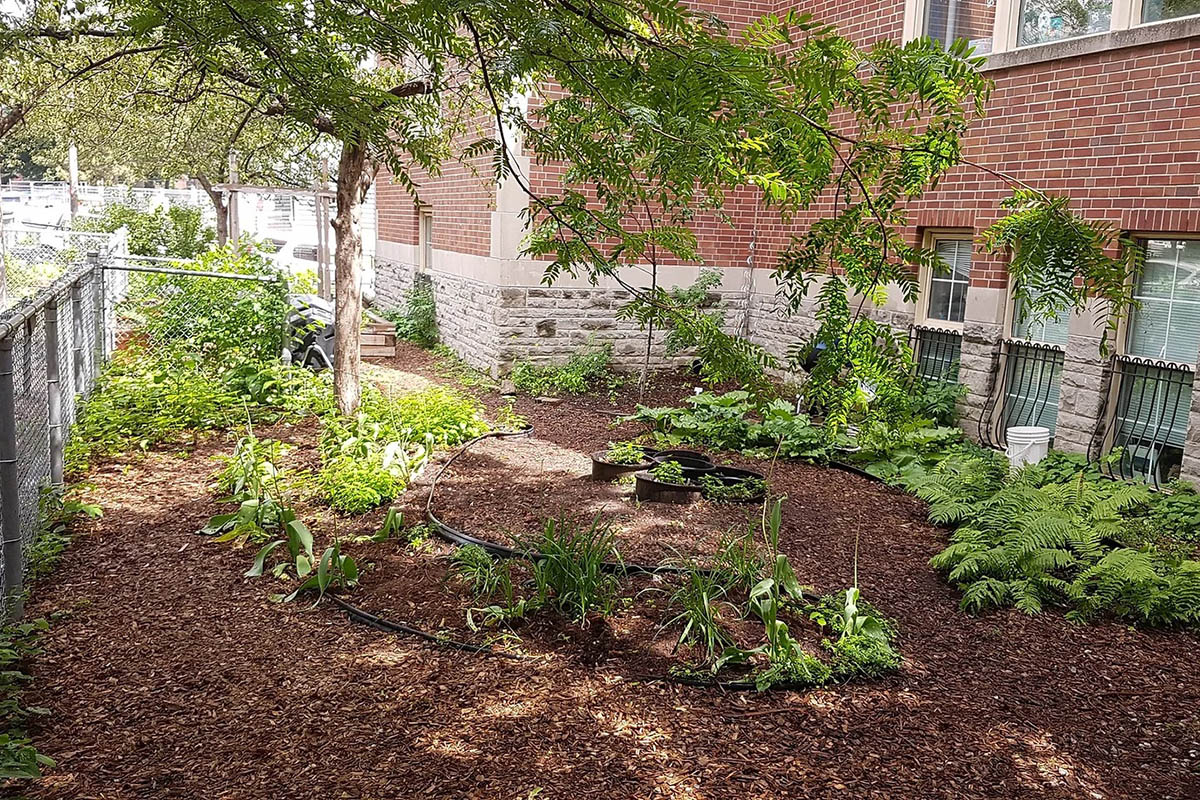
The kids explore nature throughout the school year, planting seeds, tending to the garden, and making and eating natural foods. Green Thumbs staff visit each school once per week, and teachers book periods in the garden with their classes.
“Early exposure to the natural world for urban kids is important,” said Sunday Harrison, founder and executive director. “Reaching into the natural biophilia of children is critical for their development.”
Learning how food gets “from soil to seed to plant to our plates” is an important part of the program, Harrison said. She hopes to integrate trees and fruiting shrubs into the gardens this year.
Prior to Green Thumbs, Harrison was a private landscape and horticultural contractor. She learned more and more about urban pollinator gardens as her career progressed, and wanted to use this knowledge to give her child greater access to nature.
She started Green Thumbs in 1999 as an after-school program for kids aged six to 12 at Riverdale Farm in Toronto.
“The kids who we were walking to the farm after school were so keen, and they suggested, ‘Why don’t we have a garden at our school?’” Harrison said.
The organization offers programming for local day camps over the summer, so children from other schools can learn from the gardens. Going forward, Green Thumbs hopes to develop a network of school garden practitioners to further expand their reach.
In October 2023, the organization began offering the School Garden Land Back Training Program to teach 20 volunteers how to start, manage and run elementary school gardens in their own community. The program is a four-month course with both classroom and hands-on learning opportunities.
“After 23 years, we have some expertise to offer, and we have a lot of requests from schools to help them, but we can’t go all over the GTA,” said Harrison. “So, we want to increase the school community’s capacity to run their own gardens.”
Training program participants will have the chance to learn about decolonization, reciprocity and land stewardship from Indigenous mentors. Two Indigenous staff members also run most of Green Thumbs’ school garden programming, bringing their language to the naming of plants.
“We call it bringing the land acknowledgement to life,” Harrison said. “The kids hear it every morning on the PA system, but have they met Indigenous land stewards? Have they met Haudenosaunee people? Have they met Anishinaabe people? We’re using the school garden as a meeting place for that relationship to develop.”
Those interested in supporting Green Thumbs can become a volunteer. The charity also runs intern and co-op programs. For more info, you can contact volunteers@greenthumbsto.org.
